What Leaves, Speaks
Gris García and Carolina Páez Vélez
05.06.2026 – 19.06.2026
Mz Baltazar Laboratory / Vienna
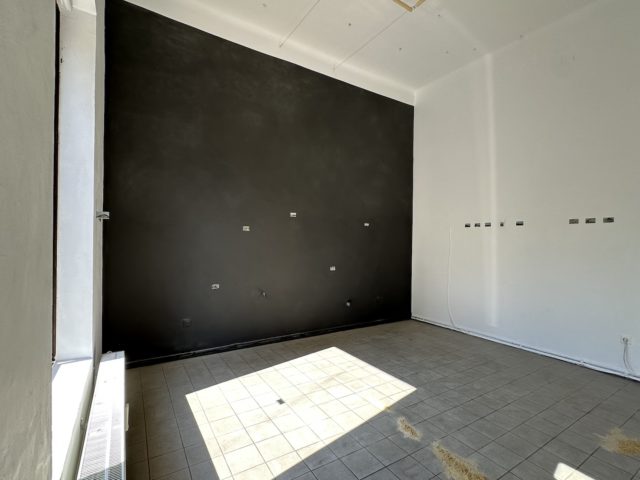
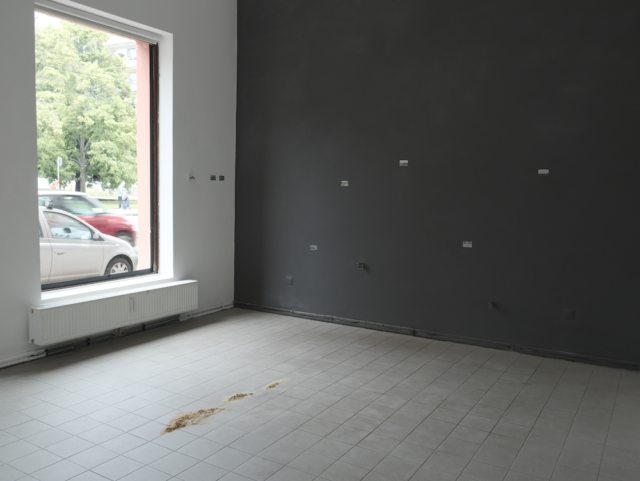
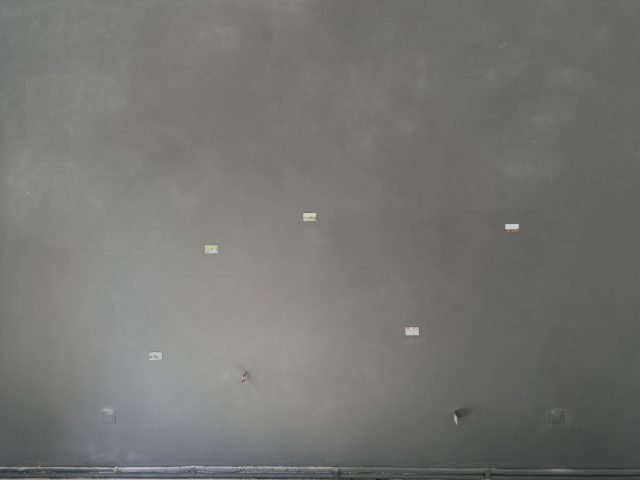
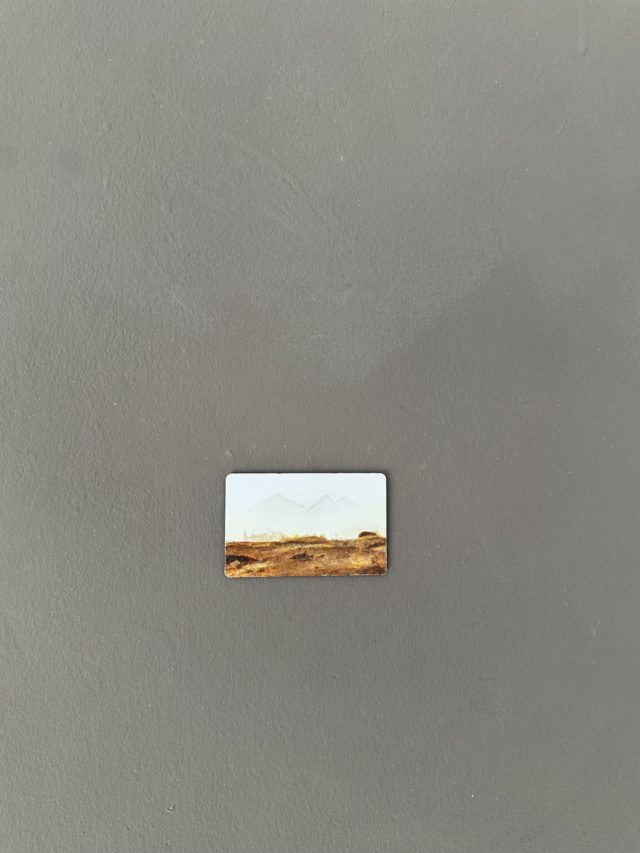
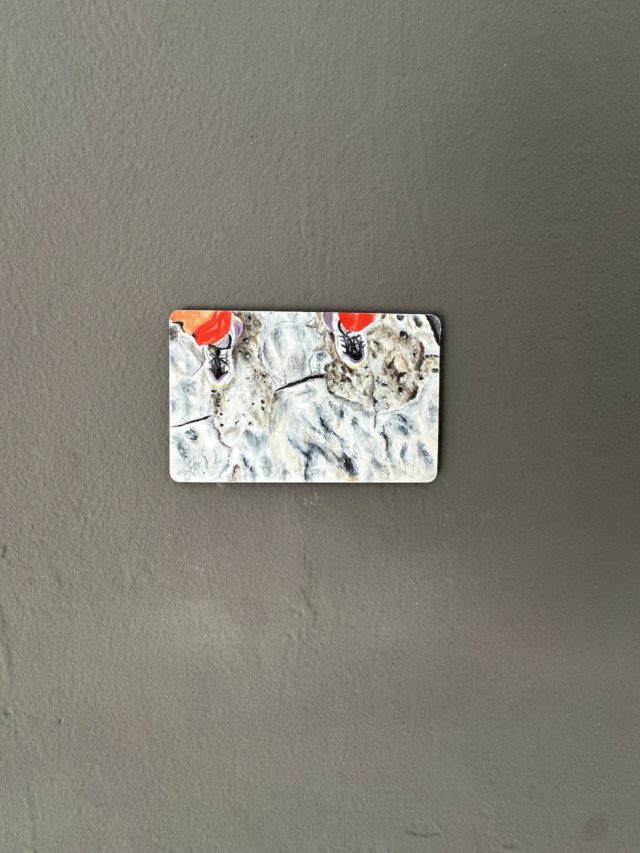
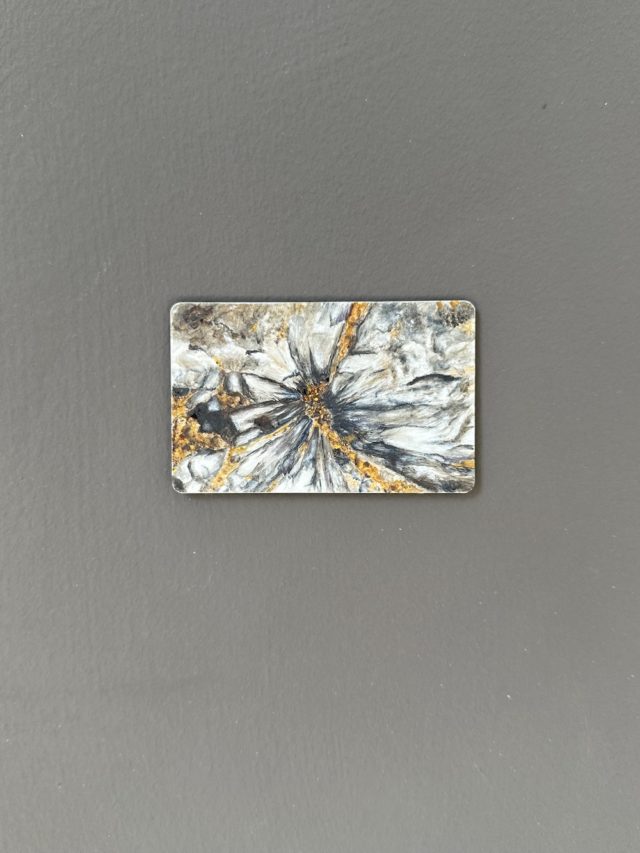
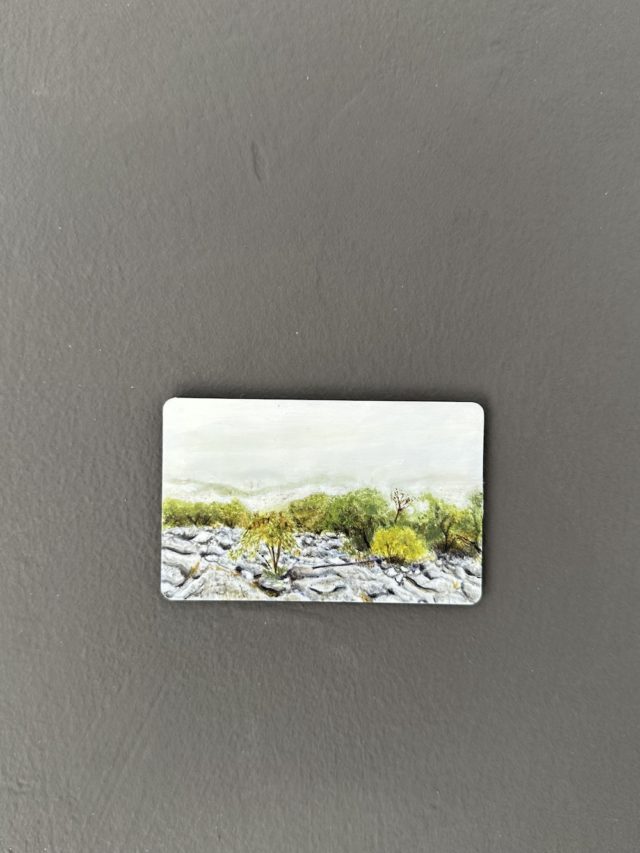
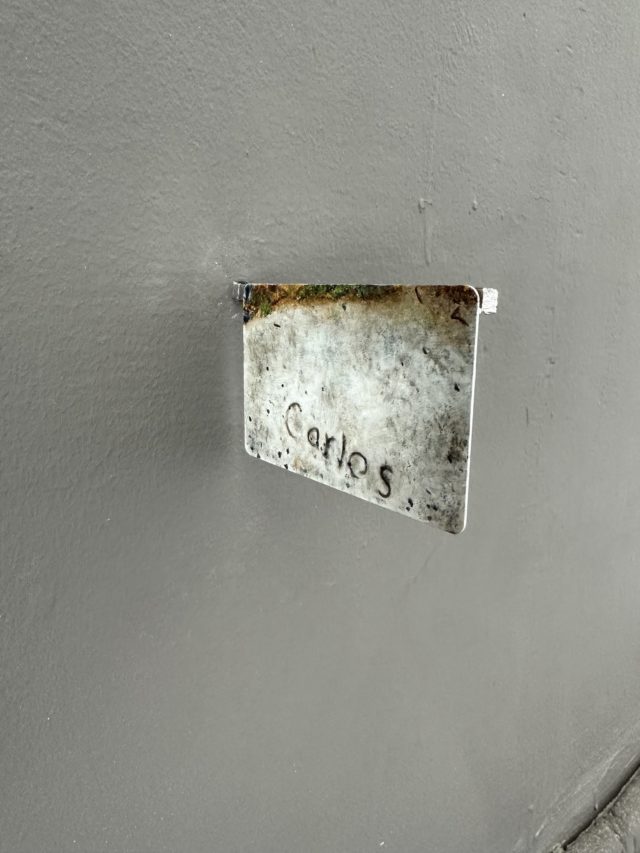
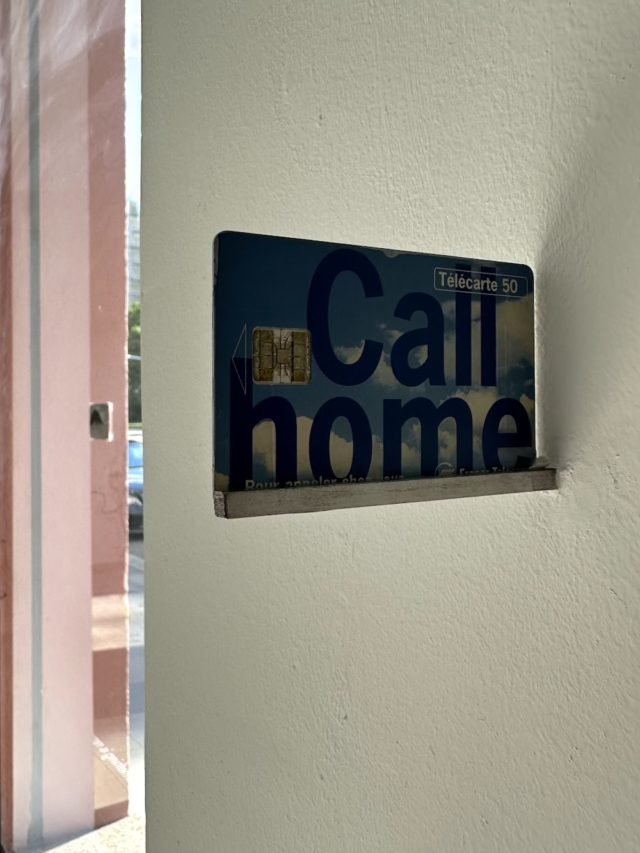
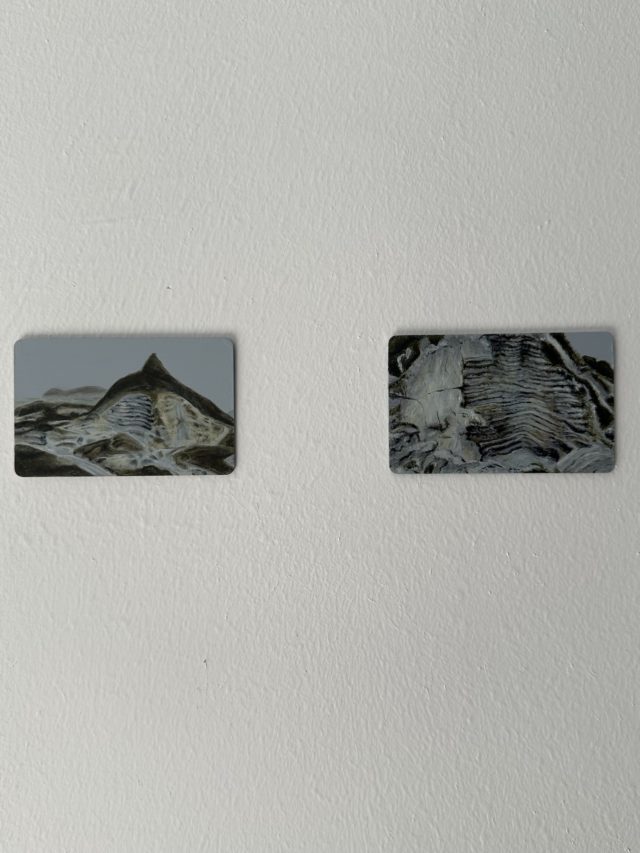
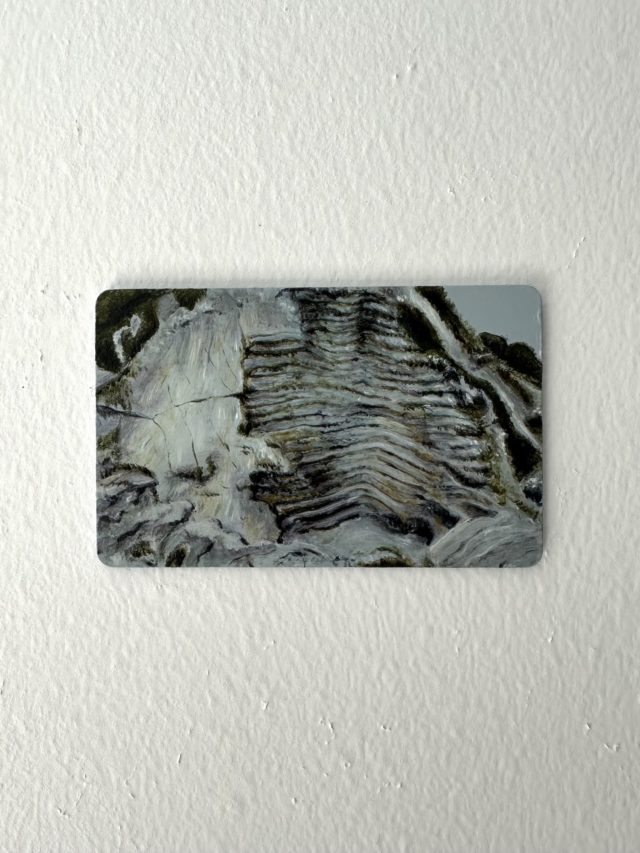
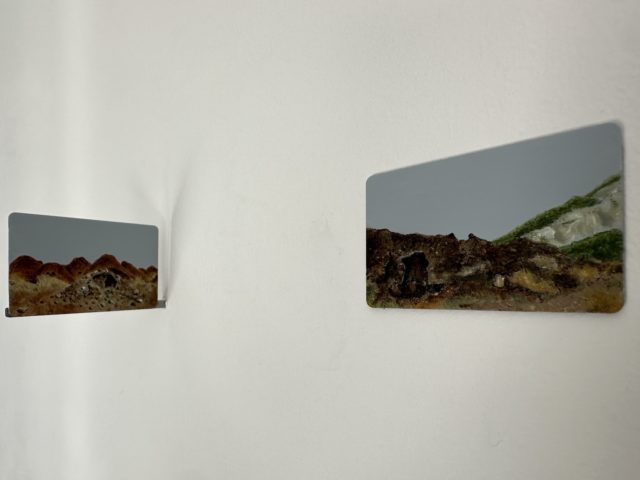
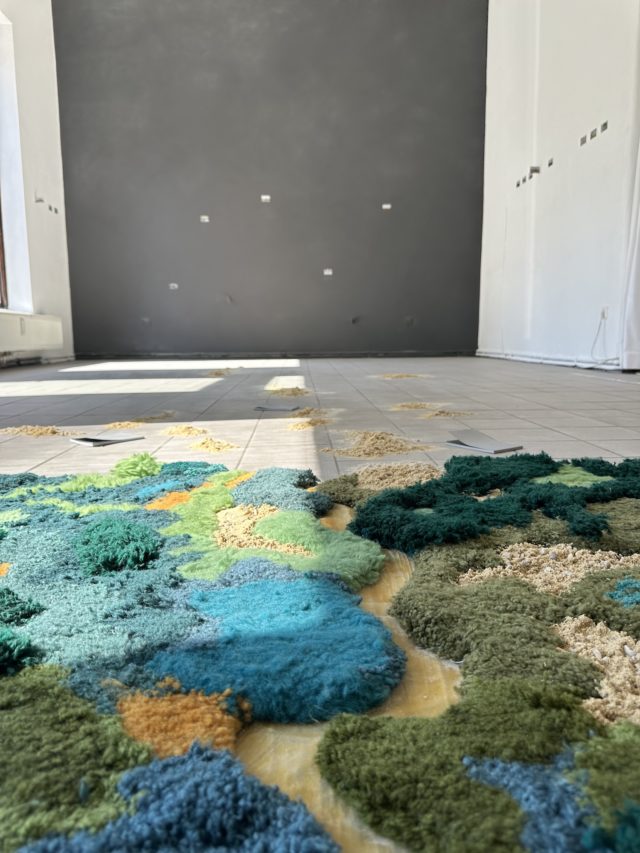
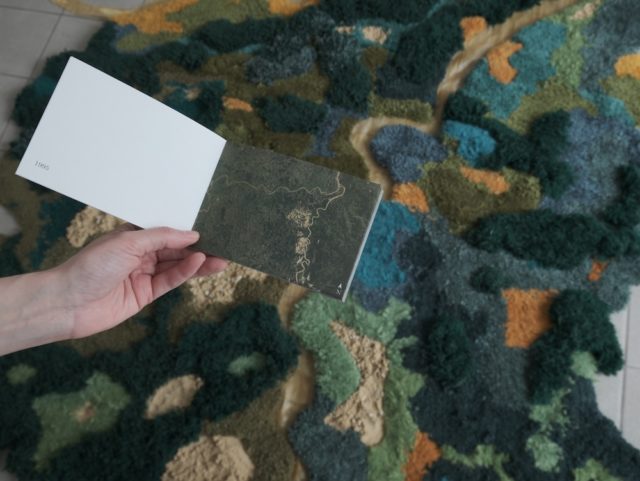
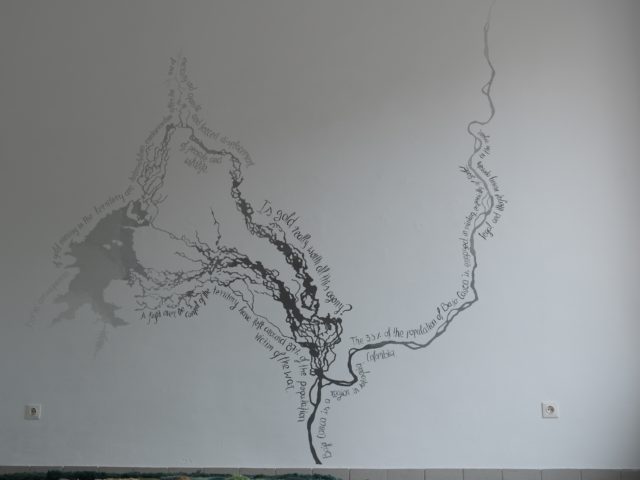
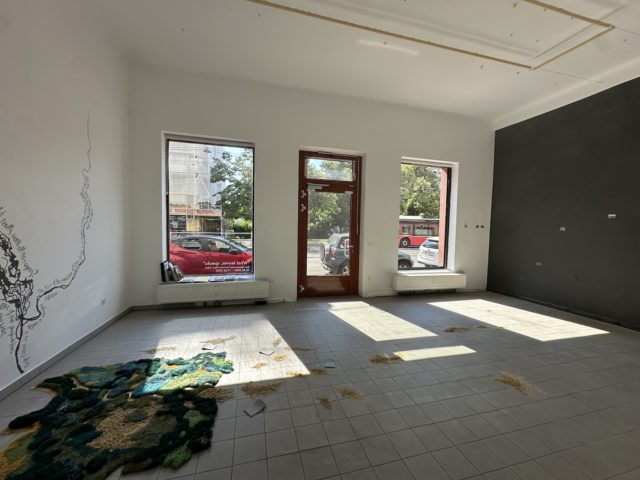
Something is removed, and cannot return. Gris García and Carolina Páez Vélez present site-specific iterations of their works on ecological memory, grief and agency. Painting, stone and fiber art trace the effects of mining on families of mountains around Monterrey, Mexico and the “Baju Cauca” region of the Nechi river in Colombia. Land is seen as family, not territory or resource. And yet, this family is met at moments of violent transformation into resource.
Something is removed, and disappears. This would even so be a violent thing in the nonconsensuality of grief, but it is also an explicit and visceral violence against the lands and people whose lives become ‘collateral damage’ in various ways. It is an explicit violence of neocolonial capitalism, whose present and unstable future increases the un-presence of beloved systems, places and people.
There is a sharpness and a softness to the vulnerability and endurance put into this exhibition. There is an element of protecting what is gone, protecting its memory- or maybe closer, its reality. This is not just about ‘informing’ visitors, or trying to create awareness. This is about living with living without.
But the artists (and lands) are not without agency. García and Páez Vélez live and work with the new connections, the questions, the participation that these disappearances bring. These disappearances respond, return, affect the relationship. The work is not a grief projected in static. It is an active relationship with mutation and disappearance and reality, as it is.
Something is removed. It remembers itself.
Curatorial text: Sarah Wilhelmy
Gris García and Carolina Páez Vélez
05.06.2026 – 19.06.2026
Algo es removido y no puede regresar. Gris García y Carolina Páez Vélez presentan versiones site-specific de sus obras sobre la memoria ecológica, el duelo y la agencia. A través de la pintura y el arte textil se trazan los efectos de la minería sobre las familias de montañas que rodean Monterrey, México, y la región del Bajo Cauca, en torno al río Nechí, en Colombia. La tierra se entiende como familia, no como territorio ni como recurso. Y, sin embargo, esta familia es violentada y convertida, por momentos, en «recurso».
Algo es removido y desaparece. La desaparición, es en sí un acto violento, pues el duelo nunca es consensuado. Una violencia explícita y visceral contra los territorios y las personas cuyas vidas se convierten, de distintas maneras, en «daños colaterales». Es la violencia del capitalismo neocolonial, cuyo presente y futuro incierto intensifican la ausencia de sistemas, lugares y personas queridas.
Hay una dureza y, al mismo tiempo, una delicadeza en la vulnerabilidad y la resistencia que atraviesan esta exposición. Hay un impulso por proteger aquello que ya no está, por resguardar su memoria o, quizás más precisamente, su realidad. No se trata únicamente de “informar” a quienes visitan la muestra ni de generar conciencia. Se trata de aprender a vivir con la experiencia de vivir sin.
Las artistas –y los territorios– no carecen de agencia. García y Páez Vélez viven y trabajan con nuevas conexiones, preguntas y formas de participación que estas desapariciones hacen surgir. Estas desapariciones responden, regresan, transforman la relación. La obra no proyecta un duelo inmóvil. Es una relación activa con la mutación, la desaparición y la realidad, tal como es.
Algo es removido. Se recuerda a sí mismo.
Texto curatorial por Sarah Wilhelmy